Chile Takes a Turn: Kast, Israel, and Latin America
Chile’s election of José Antonio Kast marks a decisive shift in the country’s relations with Israel and signals a broader political realignment unfolding across Latin America.
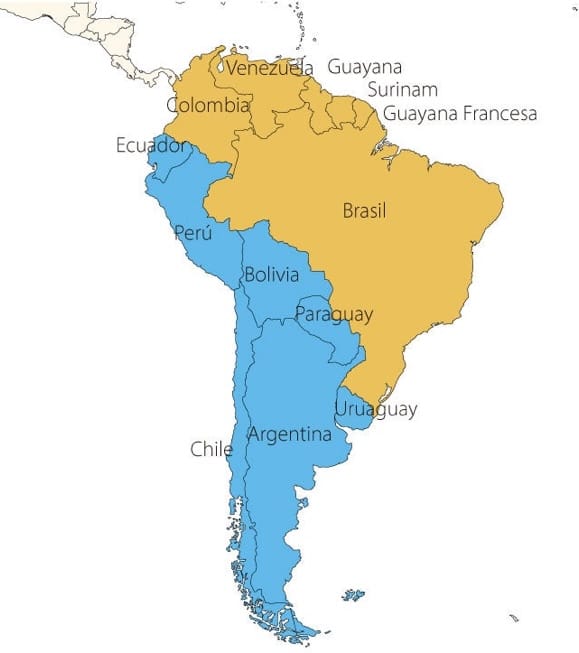
Chile’s election of José Antonio Kast marks a decisive shift in the country’s relations with Israel and signals a broader political realignment unfolding across Latin America. After several years in which Chilean foreign policy was shaped by ideological activism and public confrontation with Israel, the new presidency points toward a more pragmatic and civilizationally aligned approach—one with implications well beyond Santiago.
The significance of this shift becomes clearer when set against the record of outgoing president Gabriel Boric. From the outset of his term, Boric placed Chile at the forefront of Latin America’s most confrontational posture toward Israel, embedding foreign policy within a moralized, identity-driven framework that resonated strongly with transnational activist movements.
A Regional Shift in Latin America
On November 8, Rodrigo Paz Pereira assumed the presidency of Bolivia—a development of immediate significance for Israel. One month later, Bolivia’s foreign minister, Fernando Aramayo, met with his Israeli counterpart, Gideon Sa’ar, in Washington, where the two signed a declaration restoring bilateral relations. Bolivia had been among the first countries to sever ties with Israel following the Israel–Hamas war in Gaza two years earlier. Its reversal was not merely symbolic; it reflected a broader recalibration underway in the region.
The recalibration gained further momentum this past Sunday, when Chile elected José Antonio Kast as its next president, replacing Gabriel Boric. Boric’s presidency, which began in March 2022 marked one of the most openly adversarial period in Chile-Israel relations.
Chile–Israel Relations under Gabriel Boric
Boric began his presidency in March 2022 by declining to receive the newly appointed Israeli ambassador. He later used the United Nations General Assembly, to call for Israeli Prime Minister Benjamin Netanyahu to face proceedings at the International Court of Justice, and supported South Africa’s case against Israel at The Hague. He subsequently recalled Chile’s ambassador to Israel, and deepened his pro-Palestinian stance by withdrawing Chile’s military attachés from the country-moves widely interpreted as a diplomatic downgrading driven by ideological alignment rather than strategic necessity.
The Palestinian Factor in Chilean Politics
Chile’s internal demographics help explain the political context of these decisions.
The country is home to the world’s second-largest Palestinian population outside the Middle East, and the largest outside the Arab world. Palestinians-most of them Christians- began arriving in Chile in the late nineteenth century, fleeing persecution under the Ottoman Empire. Their presence became so deeply woven into Chilean society that a popular Chilean saying emerged: “In every small village you’ll find a priest, a policeman, and a Palestinian.”
Today, roughly 10 percent of the members of Chile’s National Congress are of Palestinian origin—about four times their share in the general population. Club Deportivo Palestino, one of country’s leading soccer clubs,is sponsored by the Dubai-registered Bank of Palestine. The Palestinian Federation of Chile has openly lobbied for the complete severance of diplomatic relations with Israel.
Against this backdrop, Chile’s small Jewish community—numbering around 16,000—experienced growing unease during Boric’s presidency. With an estimated Palestinian population of between 300,000 and 500,000, and a government aligned with left-leaning Latin American administrations vocally critical of Israel, many Chilean Jews experienced a sense of political isolation and vulnerability.
Kast’s Position on Israel and Terrorism
Following the Hamas massacre of October 7, 2023, Kast posted on X:
“The terrorist attacks against Israel deserve our complete and unequivocal condemnation. No cause justifies these brutal crimes.”
— José Antonio Kast, October 7, 2023
A month later, he sharply criticized Boric’s decision to recall Chile’s ambassador to Israel, writing:
“The terrorist group Hamas celebrates President Boric’s decision. A new shame for the country. We have a president who pardons criminals and terrorists, and now he is praised by international terrorist organizations.”
— José Antonio Kast, November 2023
These positions were not peripheral to the election outcome. Kast won 58.16 percent of the vote—7.2 million ballots—making him the most-voted president in Chilean. His communist opponent received 5.2 million votes. The margin reflected not only dissatisfaction with Boric’s domestic governance, but also a broader rejection of the ideological framing through which Chile’s politics had been conducted.
Kast has been widely labeled a “far-right caudillo,” a term that captures both his populist style and the anxieties he provokes among Chile’s progressive elites. Yet his worldview is more accurately described as civilizational conservatism. He frames Judaism primarily through a Judeo-Christian moral lens, emphasizing shared values, historical continuity and social order. His support for Israel’s security concerns overlaps with currents of religious Zionism and diaspora conservatism rather than with ethnonationalism or racial politics.
Why Chile’s Turn Matters
When Kast assumes office in March, Chile will formally join a growing bloc of Latin American governments governed by the right—a trend that has accelerated in 2025 and coincides with Donald Trump’s return to the White House. Across the region, electorates appear increasingly skeptical of leftist moral grandstanding abroad coupled with economic mismanagement at home.
Argentina’s president Javier Milei responded swiftly to Kast’s victory, writing: “Enormous joy at the crushing victory of my friend José Antonio Kast in Chile’s presidential elections.” Milei described the result as “one more step by our region in defense of life, freedom, and private property,” adding that both governments would work together “so that the Americas embrace the ideas of freedom and free ourselves from the oppressive yoke of 21st-century socialism.” He concluded characteristically, with his trademark slogan: “Long live freedom, damn it.”
Chile’s political turn is not merely a bilateral development affecting relations with Israel. It reflects a broader reassessment underway across Latin America—one in which foreign policy driven by ideological signaling and transnational activism is increasingly meeting electoral resistance. Whether this shift proves durable or cyclical remains to be seen. But Chile’s choice suggests that, at least for now, moralized diplomacy has a political cost, and that civilizational alignment and strategic realism are re-entering the region’s political vocabulary.
Rabbi Moshe Pitchon served as a rabbi in Chile during the final days of Salvador Allende’s government and throughout the first years of the Pinochet era. He is the author of Something New is Happening: The Life and Times of Naftali Bennett,” and The Maccabean Playbook: Then and Now.