Third Jewish Commonwealth — Issue #4
Lieberman’s relevance in 2026 lies not only in the number of seats Yisrael Beiteinu may win, but in the fact that Israeli politics itself has moved closer to many of the structural questions he spent years forcing onto the national agenda.
Israel Elections 2026 Brief
Serious Analysis for a Decisive Election
──────────
Issue #4 | May 2026
MAIN BRIEFING
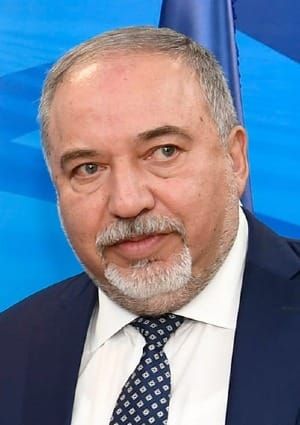
Avigdor Lieberman and the Post-Soviet Transformation of Israeli Politics
Few figures in Israeli politics have been as simultaneously influential, controversial, misunderstood, and structurally important as Avigdor Lieberman.
For years, foreign coverage often reduced him to a caricature: a hardline nationalist, a provocateur, an ethnic strongman speaking to Russian-speaking immigrants through the language of force and confrontation. Yet such portrayals, while not entirely baseless, obscured far more than they revealed.
Lieberman’s importance does not lie merely in his rhetoric, his tactical maneuvering, or even the governments he helped build and destroy. His deeper significance is historical. He emerged as the political expression of one of the most consequential transformations in modern Israeli society: the arrival and consolidation of the post-Soviet Israeli community.
That immigration wave altered Israel demographically, culturally, economically, militarily, and politically. It introduced into Israeli life a large secular population shaped not by the ideological traditions of Labor Zionism or the religious worldview of national-religious Judaism, but by the lived experience of Soviet collapse, authoritarian bureaucracy, cultural secularism, geopolitical insecurity, and a profound distrust of political romanticism.
To understand Lieberman, therefore, is to understand something larger than one politician. It is to understand the emergence of a new Israeli political temperament: secular but nationalist, pragmatic but deeply security-oriented, impatient with ideological symbolism, skeptical of institutional weakness, and increasingly unwilling to accept the political arrangements that had governed Israel for decades.
Born in 1958 in Kishinev, then part of the Soviet Union and today the capital of Moldova, Lieberman, like many Soviet Jews of his generation, had his worldview was formed inside a society where ideology and reality rarely aligned.
Lieberman speaks less in the language of historical redemption or religious destiny than in the language of deterrence, force, discipline, and state interest. His politics reflected not the emotional tone of Zionist pioneering mythology, but the colder realism of populations shaped by instability and systemic collapse.
The collapse of the Soviet Union triggered one of the largest immigration waves in Israeli history. Between the late 1980s and early 2000s, more than one million immigrants from the former Soviet Union arrived in Israel, dramatically reshaping the country.
This population was exceptionally educated. Scientists, engineers, physicians, musicians, military professionals, mathematicians, and academics entered Israeli society in enormous numbers. Their integration transformed sectors ranging from medicine and technology to defense and higher education.
Most Soviet immigrants arrived deeply secularized. Many had little familiarity with organized Jewish religious life. Others encountered Israel’s religious establishment with resentment, particularly regarding issues of marriage, conversion, burial, and personal status. The centralized authority of the rabbinate often appeared to them not as spiritual leadership but as another form of bureaucratic institutional control.
At the same time, many immigrants also rejected the assumptions of the Israeli left. The Oslo years coincided with the immigration wave, yet a significant portion of Russian-speaking Israelis remained deeply skeptical of peace-process optimism and highly attentive to questions of security and military power.
The result was the emergence of a constituency that fit imperfectly into Israel’s traditional political map. Economically modern, culturally secular, highly educated, nationalist, and intensely security-conscious, Russian-speaking Israelis represented a distinct sociological bloc searching for political representation.
Lieberman recognized this before most Israeli politicians did.
In 1999, he founded Yisrael Beiteinu — “Israel Our Home.” The name itself carried symbolic weight. It suggested belonging, ownership, and rootedness for immigrants still navigating the boundaries of Israeli identity. But the party was never solely an immigrant party. Lieberman sought to transform post-Soviet Israelis from a demographic phenomenon into a durable political force.
He largely succeeded.
Lieberman’s nationalism differed in important ways from the dominant currents of the Israeli right.
Much of the religious-nationalist movement grounded its politics in biblical attachment to land, messianic narratives, or theological conceptions of Jewish sovereignty. Lieberman’s worldview is noticeably more secular and statist. His emphasis falls not on redemption but on power, borders, deterrence, and institutional authority.
Lieberman often aligned electorally with the right, but he was never fully at home within the religious Zionist universe. His conflicts with ultra-Orthodox parties became some of the defining battles of his political career. While sharing hawkish positions on security, he consistently resisted the growing influence of religious parties over public life and coalition politics.
In this sense, Lieberman represents a form of secular nationalism that has relatively weak roots in Israel’s earlier political traditions. He appeals to voters who view Jewish identity primarily through the lenses of peoplehood, civilization, statehood, language, military strength, and historical continuity rather than through halachic authority or religious observance.
This made him a profoundly important figure in the transformation of the Israeli right itself.
The Israeli right had once been dominated primarily by Revisionist Zionism and later by alliances between nationalism and religious Zionism. Lieberman introduced another model: a post-Soviet nationalist secularism focused on state power, civic integration, military obligation, and suspicion toward religious institutional privilege.
His electorate is often patriotic without being traditionally religious, nationalist without being theological, and fiercely Israeli while remaining culturally shaped by experiences far beyond the Middle East.
Coalition Politics and the Politics of Leverage
Israel’s parliamentary system rewards fragmentation, tactical maneuvering, and coalition leverage. Few politicians mastered these dynamics more effectively than Lieberman.
Repeatedly, he positioned himself not as the uncontested leader of a governing bloc but as the indispensable actor capable of enabling or collapsing governments. This gave him influence disproportionate to the number of seats his party held.
Lieberman’s politics are not driven primarily by ideological purity, but by leverage, positioning, and the pursuit of structural influence.
He understands something fundamental about Israeli politics: in a fragmented parliamentary system, power often belongs less to the largest party than to the actor capable of navigating between competing blocs. Lieberman excelled at that navigation.
The Anti-Haredi Front
Over time, Lieberman’s opposition to ultra-Orthodox political power has become one of the central pillars of his political identity.
The issue is not merely theological. It is sociological, institutional, and cultural.
Many Russian-speaking Israelis view themselves as deeply integrated into the burdens of Israeli society: military service, professional sectors, taxation, and national defense. The exemptions granted to large segments of the Haredi population — especially regarding military service — generates increasing resentment. Lieberman is one of the most forceful political voices articulating that frustration.
His demands for military conscription reform, civil marriage, and limitations on religious coercion reflect a broad tension inside Israeli society concerning the relationship between religion and state. But unlike liberal secularists who framed these debates primarily around individual rights, Lieberman often frames them around reciprocity, obligation, and state cohesion.
The state, in his view, cannot sustain itself if large sectors of the population remain outside shared civic obligations while retaining disproportionate coalition leverage. This position increasingly resonates with secular Israelis far beyond the Russian-speaking electorate.
In this sense, Lieberman anticipated political tensions that would later become central to Israeli public debate, especially after October 7 and the renewed national focus on military service, sacrifice, and burden-sharing.
After October 7
The October 7 attacks transformed Israeli politics in ways still unfolding. Longstanding assumptions collapsed. Security doctrines were shattered. Institutional trust suffered enormous damage. The political system entered another phase of instability and reconstruction.
In several respects, the crisis strengthened themes long central to Lieberman’s worldview.
The renewed emphasis on military preparedness, deterrence, state competence, and national cohesion moved Israeli discourse closer to the security-oriented realism he had championed for years. Simultaneously, debates surrounding Haredi military exemptions intensified dramatically as reservists and soldiers carried prolonged wartime burdens.
Yet the post-October 7 environment also exposed the limits of Lieberman’s political model. The Russian-speaking electorate that once formed the backbone of his movement has gradually dispersed across Israeli society. Younger generations are more integrated linguistically and culturally. The immigrant identity politics that initially fueled Yisrael Beiteinu no longer possess the same mobilizing force.
Still, Lieberman remains relevant because the structural questions he raised have not disappeared.
What should Israeli nationalism look like in a highly fragmented society? How can civic obligations be distributed fairly? What happens when coalition dependency weakens state cohesion? Can secular nationalism remain politically coherent without religious foundations? How should Israel balance tribal identities against shared national responsibility? These questions now sit near the center of Israeli political life.
Lieberman is not the only politician asking them. But he was among the first to recognize how explosive they would eventually become.
Lieberman’s enduring significance lies not merely in the ministries he held or the coalitions he disrupted. It lies in the Israel he helped reveal.
For decades, outsiders often interpreted Israeli society through simplified binaries: left versus right, secular versus religious, peace camp versus nationalist camp. Lieberman exposed a more fragmented and complicated reality. He demonstrated that Israeli nationalism itself had diversified into competing forms shaped by radically different historical memories and sociological experiences.
Whether Lieberman himself remains at the center of Israeli politics is ultimately less important than the transformation he embodies. The social forces that produced him did not disappear. They became woven into the structure of Israeli society itself.
In that sense, Lieberman was never simply a political anomaly. He was a sympton that Israel had entered a new historical phase.
UPCOMING ANALYSES
• Can the opposition bloc actually win?
• Will opposition parties begin merging to avoid wasting mandates?
• What happens to the current coalition if it loses power?
• The future of Smotrich, Ben-Gvir, Deri, and the Haredi parties outside government
• Is a post-Netanyahu split emerging inside the Likud itself?
• Can the Israeli right reconstruct itself after Netanyahu?
