Issue #2 | Gadi Eisenkot and Israel’s Leadership Debate After October 7
A profile examining Gadi Eisenkot’s role in Israel’s post–October 7 political landscape and the broader leadership debate shaping the 2026 elections.
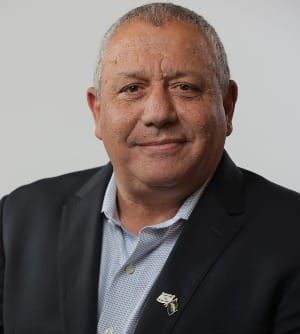
In this second issue: Gadi Eisenkot
The General Who Entered Politics to Hold the State Together
EDITOR’S NOTE
This week’s issue examines the growing role of former military figures in Israel’s post–October 7 political landscape through the case of Gadi Eisenkot.
This week’s issue examines the growing role of former military figures in Israel’s post–October 7 political landscape through the case of Gadi Eisenkot.
As Israel approaches the 2026 elections, questions surrounding leadership, institutional trust, national cohesion, and the relationship between security experience and political legitimacy are increasingly shaping public debate.
The full analytical profile is available in the Candidate Profiles section for members.
Gadi Eisenkot
The General Who Entered Politics to Hold the State Together
On the morning of October 7, Gadi Eisenkot was preparing to go for a walk.
The sirens interrupted the routine before the television images did. As footage from southern Israel began appearing on television — armed men inside Israeli towns, pickup trucks moving through communities near Gaza, scenes that seemed impossible to process in real time — Eisenkot immediately understood that the country was facing a catastrophe on a historic scale.
At the time, the former IDF chief of staff had already entered politics as part of the opposition camp seeking to replace Prime Minister Benjamin Netanyahu. One year earlier he had joined Benny Gantz — another former IDF chief of staff and longtime military colleague — in the centrist National Unity alliance (HaMahane HaMamlakhti), a political framework created partly in response to what its leaders viewed as the growing institutional instability, domestic polarization, and dependence on far-right coalition partners that had come to define Netanyahu’s government.
Their decision to join Netanyahu’s wartime government after October 7 carried enormous political weight. Until then, both men had presented themselves not merely as political rivals of Netanyahu but as representatives of an alternative model of leadership centered on institutional restraint, national cohesion, and strategic seriousness.
National Unity, the centrist alliance they helped lead, had emerged partly as a response to the growing influence of far-right politicians inside Netanyahu’s coalition government, particularly Itamar Ben-Gvir — leader of the Otzma Yehudit (Jewish Power) party and minister of national security — and Bezalel Smotrich, leader of the Religious Zionism party and finance minister. Both men had become central pillars of Netanyahu’s parliamentary coalition and represented a hardline nationalist and religious agenda that Eisenkot and Gantz viewed as dangerously polarizing and institutionally destabilizing.
Yet after October 7, Eisenkot and Gantz concluded that remaining outside the government during wartime would deepen the national crisis. Within days, they reversed their opposition stance and entered an emergency coalition under Netanyahu. They then joined a small wartime cabinet responsible for overseeing the largest war Israel had fought in decades.

Eisenkot did not enter politics as a charismatic savior, ideological revolutionary, or media personality. Instead, he spoke in the language of systems, institutions, strategy, and responsibility.
Even supporters often described him as uncomfortable with slogans and performative politics. His public image was built less around emotional identification than around seriousness: a restrained former general associated with discipline, caution, and institutional thinking.
That same restraint would later define his conduct inside the war cabinet.
During one of the most consequential discussions of the war — the October 11 debate over a possible strike against Hassan Nasrallah and Hezbollah’s leadership — Eisenkot reportedly interrupted the conversation after realizing there was no official recording or stenographer present. Before discussing whether Israel should open a second front in Lebanon, he insisted that the meeting first be formally documented.
The moment was revealing. While others argued over military escalation, Eisenkot’s instinct was procedural. The state, even under extreme pressure, had to function as a state.
Over time, his role inside the government evolved into something more politically consequential. He became one of the clearest internal critics of Netanyahu’s wartime conduct, accusing the government of operating without coherent strategic objectives, delaying difficult decisions, and subordinating national priorities to political survival. He pushed for hostage negotiations, criticized the absence of planning for Gaza’s political future, argued for an earlier strategic shift toward Lebanon, and increasingly warned that extremist political forces were exerting more influence over national policy than the formal wartime leadership itself.
At the same time, tensions between Eisenkot and the political structures he joined were also deepening. His insistence on party democratization, institutional procedure, and broader anti-Netanyahu political consolidation increasingly collided with the centralized nature of Benny Gantz’s National Unity Party and with the fragmentation of Israel’s opposition camp.
What emerged from Eisenkot’s political trajectory was therefore not simply another retired general entering electoral life, but a figure attempting to redefine what responsible Israeli leadership should look like after October 7.
Whether he ultimately becomes prime minister or remains a transitional figure of the post-October 7 period, Eisenkot’s rise reflects the emergence of a significant current within Israeli society seeking leadership grounded less in ideological spectacle and political confrontation than in institutional seriousness, strategic discipline, and the stabilization of a deeply fractured state.
Still, Eisenkot remains a deeply contested figure. Large sectors of Israeli society continue to identify far more strongly with Netanyahu, the nationalist-religious camp, or parties to Eisenkot’s right, viewing his worldview as either politically naïve, overly institutional, or disconnected from the ideological and security realities reshaped by October 7.
Third Jewish Commonwealth is an independent analytical publication dedicated to understanding Israeli politics, leadership, coalition dynamics, and the broader historical and institutional forces shaping Israel’s future.
Our aim is simple: