Third Jewish Commonwealth Issue #5
Yair Golan and the Crisis of Israeli Leadership
Israel Elections 2026 Brief
Serious Analysis for a Decisive Election, by Moshe Pitchon
Yair Golan and the Crisis of Israeli Leadership
Israel's 2026 elections are not merely another contest between political parties, personalities, or coalition blocs. They are unfolding in the shadow of the greatest national trauma in Israel's modern history and amid a deep struggle over the future identity of the Jewish state itself.
Questions that for years remained theoretical have now become immediate and unavoidable: What kind of leadership does Israel require after October 7? What balance should exist between military power and democratic restraint? Can Jewish sovereignty preserve moral seriousness under conditions of prolonged conflict? Can Israeli society recover from years of polarization, institutional erosion, ideological radicalization, and political exhaustion?
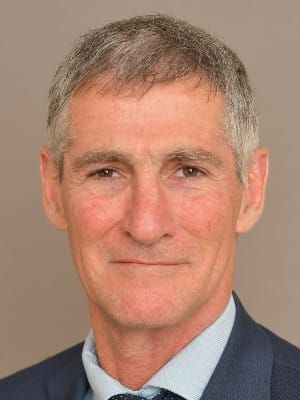
Within that broader national debate, the emergence of Yair Golan as one of the central figures of the opposition camp is highly revealing.
For years, Golan occupied a paradoxical position inside Israeli public life: admired by many within the military establishment for his operational abilities and strategic clarity, while simultaneously distrusted and vilified by sectors of the political right for his warnings about democratic and moral deterioration inside Israeli society. October 7, 2023 transformed both his public image and his political significance.
On the morning of that day, as Hamas fighters crossed into southern Israel and entire communities collapsed into confusion, Yair Golan did not wait for orders, statements, committees, or television studios. He put on an old uniform, laced a pair of paratrooper boots, drove to the Home Front Command headquarters near Ramle, received a rifle and ammunition, and headed south toward the Gaza border communities under attack.
At the time, Golan was no longer an active-duty officer. He had already completed one of the most senior military careers in Israel, serving as deputy chief of staff of the Israel Defense Forces and later entering politics as part of the opposition to Benjamin Netanyahu's government. Yet when the scale of the attack became clear, instinct overrode politics.
Driving his small Toyota Yaris through roads littered with bodies and abandoned vehicles, Golan began rescuing survivors fleeing the Nova music festival massacre near Re'im. Using WhatsApp location pins sent by terrified young people and their parents, he repeatedly entered the combat zone to extract civilians hiding in orchards, fields, and roadside brush while Hamas gunmen were still operating in the area.
Golan would later minimize his own actions, insisting that the real heroism belonged to the soldiers, police officers, security teams, and civilians who fought the attackers directly inside the kibbutzim and towns. But October 7 transformed his public standing. A former general long identified with the political left — and once heavily attacked for his warnings about democratic and moral decline inside Israeli society — suddenly emerged in the eyes of many Israelis not as a partisan figure but as a symbol of responsibility under conditions of national collapse.
The events of that morning also revealed something deeper about Golan himself. His response was not ideological, theatrical, or rhetorical. It was operational. Faced with institutional paralysis, he moved toward danger while much of the state apparatus was still struggling to understand the scale of the catastrophe unfolding across southern Israel.
Yet the roots of Golan's political identity long predated October 7.
The defining rupture in his military career emerged not from a battlefield failure, operational dispute, or strategic disagreement, but from a speech.
By 2016, Golan had risen to deputy chief of staff of the Israel Defense Forces — effectively the second-highest military office in the country and traditionally one of the final steps before the top command. Widely regarded as one of the army's most talented officers, he appeared to many observers to be a natural candidate for chief of staff.
But on Holocaust Remembrance Day in May 2016, at a ceremony in Kibbutz Tel Yitzhak, Golan delivered remarks that would fundamentally alter the trajectory of his career. Speaking not about military preparedness or national security, but about moral deterioration and democratic responsibility, he warned of dangerous currents developing within Israeli society itself.
"If there is something that frightens me in the memory of the Holocaust," he declared, "it is identifying horrifying processes that occurred in Europe, particularly in Germany, seventy, eighty, and ninety years ago, and finding evidence of their existence here in our midst today."
The speech was triggered in part by the killing of a subdued Palestinian attacker in Hebron by an Israeli soldier— an incident that deeply divided Israeli society. While nationalist politicians rallied behind the soldier, Golan warned that a society incapable of moral self-examination risked losing its ethical bearings.
For Golan, Holocaust remembrance was not meant only to recall what others had done to Jews, but to force Jews themselves to examine what kind of society they were becoming under conditions of sovereignty and power.
The reaction was immediate and explosive. Prime Minister Benjamin Netanyahu denounced the speech as "outrageous." Right-wing politicians accused Golan of comparing Israel to Nazi Germany. Although he explicitly denied making such a comparison, the political damage proved irreversible. Years later, Golan would recall that then-defense minister Avigdor Lieberman privately told him that Netanyahu would no longer consider him for chief of staff because of the speech.
In March 2018, after thirty-seven years of military service, Yair Golan retired from active duty.
His entry into politics emerged directly from those experiences. Golan had come to believe that Israel's problems were no longer merely military but civilizational: a crisis of leadership, democratic culture, institutional responsibility, and moral seriousness.
After leaving the army, he entered politics through the Zionist left, eventually joining the Meretz party, and later serving briefly as deputy minister of economy under the Bennett-Lapid government. But even within the Israeli left, Golan often remained an awkward fit.
Although he openly defined himself as a leftist Zionist, he consistently rejected what he viewed as the left's discomfort with patriotism, military service, and national identity. "Most of the left-wing camp is ultra-patriotic," he argued. "It is the true national camp."
At the same time, he resisted simplistic ideological labels altogether. "Don't talk to me in labels, talk to me in essentials," he said repeatedly.
Those essentials, in his view, included defending democratic institutions, preventing annexation, preserving judicial independence, rebuilding military credibility after October 7, reducing internal polarization, and restoring governmental seriousness after years of political paralysis.
Politically, Golan developed a reputation for bluntness and unusually direct speech. Admirers viewed him as morally serious and refreshingly honest. Critics saw him as rhetorically reckless and politically undisciplined. Even many supporters acknowledged that his sharpness limited his broader appeal among centrist voters — yet those same qualities increasingly distinguished him from Israel's more cautious opposition leadership.
Throughout the massive protests against Netanyahu's judicial overhaul in 2023, Golan became one of the most visible public voices warnings that Israel was drifting toward democratic breakdown. He argued repeatedly that internal division and institutional erosion were weakening Israel strategically and emboldening its enemies.
After October 7 the former general who had once been denounced by sectors of the Israeli right as dangerously radical now appeared to many Israelis as one of the few leaders who had demonstrated competence, responsibility, and personal courage during the worst day in the country's modern history.
In 2024, Golan won the leadership of the historic Labor Party and simultaneously advanced a broader merger project — bringing together Labor, Meretz, and elements of the anti-government protest movement into a new political framework called The Democrats.
The project reflects his central political conviction: that Israel's liberal-democratic camp can survive only if it becomes broader, more patriotic, more security-oriented, and more operationally serious. He does not envision a niche ideological left. He seeks instead to construct a governing alternative capable of confronting Benjamin Netanyahu while reconnecting liberal Zionism to national responsibility and statecraft.
Whether Golan can ultimately translate military credibility and moral authority into durable political leadership remains uncertain. Even many admirers acknowledge that he lacks some of the instincts of a natural politician.
But his significance within Israel's 2026 elections extends beyond electoral mathematics.
Yair Golan represents something larger now unfolding inside Israeli society: an attempt to reconstruct a model of leadership grounded simultaneously in military experience, democratic commitment, civic responsibility, and moral seriousness.
That combination increasingly stands at the center of Israel's post–October 7 political struggle.
The question facing Israelis in 2026 is therefore not only whether figures like Yair Golan can win elections.
It is whether Israeli society itself still desires the kind of leadership he represents.

Thank you for Reading
The 2026 Israeli elections are not significant only because they will determine who governs the country after one of the greatest crises in its history.
They matter because Israel is no longer merely a state inhabited by Jews.
It has become the central arena in which Judaism itself is being forced to confront the realities of sovereignty, power, democracy, military force, public ethics, and civilizational responsibility in the modern world.
These elections therefore carry implications not only for Israelis, but for the future shape of Jewish life itself.
Rabbi Moshe Pitchon